FIG. 03.1 — Description
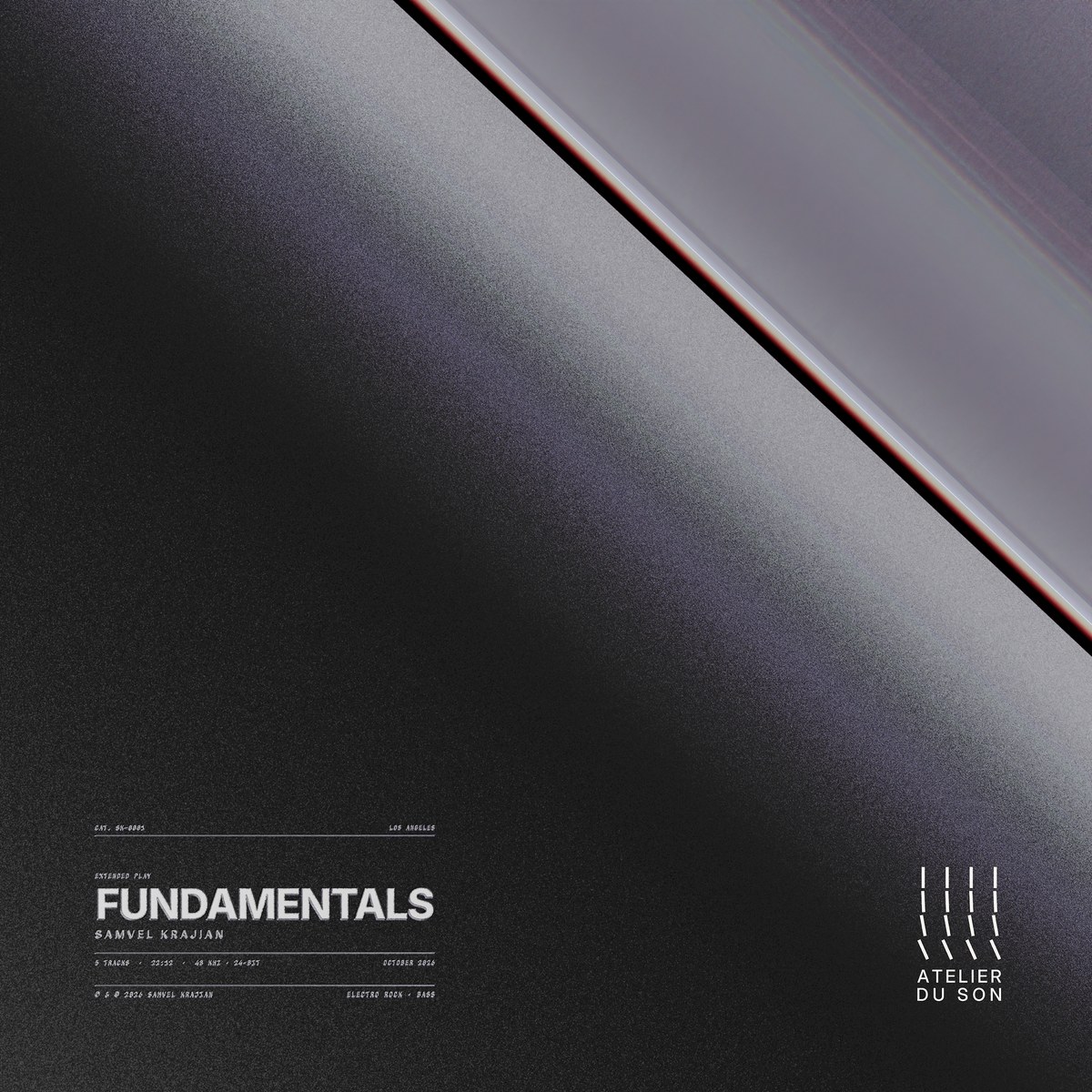
CAT. SK—0001
Fundamentals
Fundamentals is built on a single idea: Controlled Chaos. Across five tracks, the music moves between two extremes, restraint and excess, held inside the familiar forms of popular music.
The music and sound design is inspired by French electro and electro-rock, in the line of Daft Punk, Justice and Gesaffelstein. The ethos of the project comes from the work of Ryoji Ikeda and Alva Noto. The sonic palette is monochrome, built from what I call "Invisible" textures: sounds of bare materials, clear, reflective and translucent.
FIG. 03.2 — Themes
Reduction · Contrast · Form · Lineage
Themes
Reduction
In writing Fundamentals, I took a reductive approach to every parameter of the music: form, sound design, musical material, texture and density, and instrumentation. The aim was to strip away excess and reach the bare state of each element.
Contrast
Ryoji Ikeda speaks about contrast, expressed through his black and white visuals, and the precision of his sound design and musical form. Something is either black or white, 0 or 1, yes or no, on or off. That binary shaped the form of each track. The “verses” are small in dynamics and density; the “choruses” are large, brutal and excessive. The sounds follow the same division: glossy, shiny, metallic and clean in the verses; chaotic, distorted, dense and noisy in the choruses. Controlled Chaos is the tension between those two states, and the form that holds them.
Form
I took the standard song form as a starting template for each track:
Intro – Verse – Chorus – Verse – Chorus – Bridge – Chorus/Outro
The aim was not to subvert the form itself, but to push its contents to their limits, filling a familiar structure with extreme versions of the material it expects.
Lineage
French electro and electro-rock are the sonic packaging, the genre container in which these ideas take place. The ethos driving the musical and sound design decisions comes largely from Ikeda and Noto. Before writing the EP, I realized I share a parallel source of influence with the three French artists: the rock music of the 1960s and 70s. Because I know that music deeply, I can draw on it directly, and I hear their music through a wider lens.
FIG. 03.3 — Process
48 kHz · 24-bit · Stereo
Process
Physicality
I wanted the music to be felt in the body as much as heard. I pursued this primarily through bass, rhythm and sound design. Bass is what grounds music physically, what moves people to dance and connects the body to the ground beneath it.
Bass
A distorted bass synth runs through every track. It plays the role the electric guitar plays in rock music: it carries the primary musical idea, and it is the “star” of each piece. I imagined a guitar through a fuzz pedal, tuned down an octave or two: metallic, wide, noisy, at times glossy. The bass synth also carries sub content, so a single voice serves as both lead and foundation, doubling its “weight” and its function. Here I do depart from the rock template, taking the sound and role of the guitar somewhere heavier.
The basses are monophonic, built from sine and square waves with chorus, distortion and saturation, and portamento for the fluid, chrome-like movement I was after. The distortion is a low, soft-clipping type rather than a piercing one, though it does get fuzzy and heavy, closer to acid. The riffs draw on blues-minor and pentatonic rock guitar lines and the basslines of the 60s and 70s, and they arrive in the heavy choruses.
Metal and glass
I was drawn to the sound of metal, how open, pure and clean it is, yet powerful and striking. I wanted to play with metal in two states, fluid and solid. I designed the percussion in Serum 2, using spectral processing and resampling until the sounds resembled struck metal. I designed the basses to feel like molten, liquid metal, using flanging, comb filters and portamento. Visually, I imagined the palette as black and white, dark, almost brutalist, with very few colorful elements: the sounds of metal, of clear tones, of distorted bass.
Noise
I think of noise as a slab of marble. Using subtractive tools, mainly low- and high-pass filters, I sculpt gestures out of it: sweeps, risers, evolving textures. With flanging and formant filters, I also shape it into still textures. The noise here is not harsh, and it has practical musical roles:
- as a one-shot, like a faux open hi-hat
- as a gesture
- as padding beneath other sounds
- as a way to fill the spectrum of a dense section and add weight
Noise is chaos in its sonic form, and carving it through filters and volume automation is what makes it controlled.
Feedback
Feedback is the other side of that idea: a system on the edge of running away, held just short of it. It draws on the electric guitar and sits naturally beside the metallic sounds, and I simply love how it sounds. There is something pure about feedback. It feels alive, like a physical phenomenon. I use it as an effect, and many of the bass sounds verge on feedback as they pass through distortion processing.
"Invisible" Textures
Ultimately, I wanted the sounds in this work to be open. I populated the spatial field and frequency spectrum intentionally, and left them bare and isolated where appropriate. I have long called this approach to sound design Invisible: clean sounds, sounds of bare materials, metals, glass, sine waves, white noise, comb filtering, low-feedback flanging. Elegant sounds. I'm not sure why I call them Invisible. Maybe it's because these sounds feel reflective, translucent, sometimes even transparent. I'll realize in time.
Drums
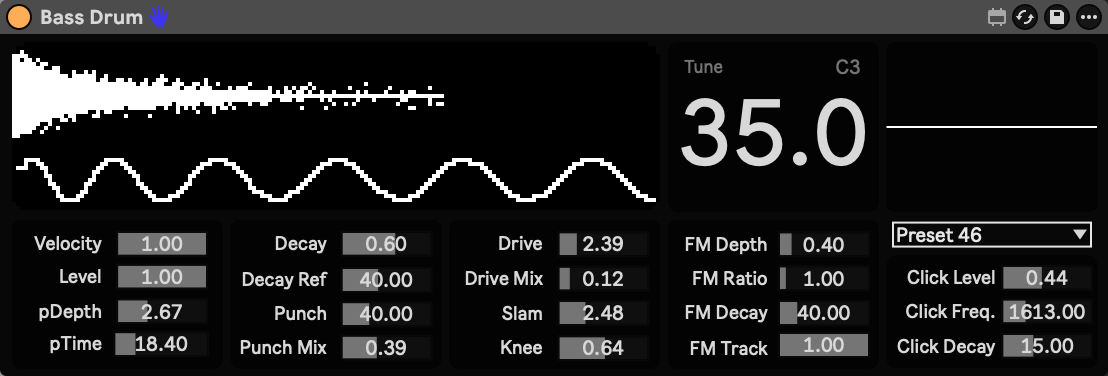
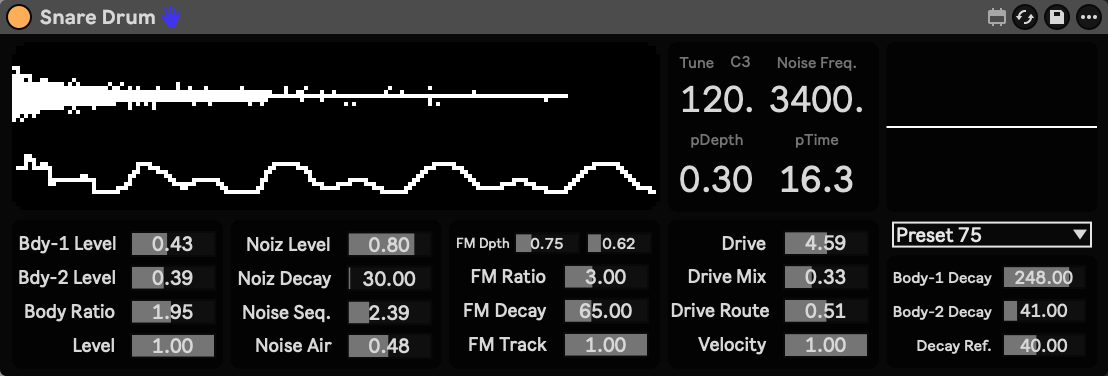
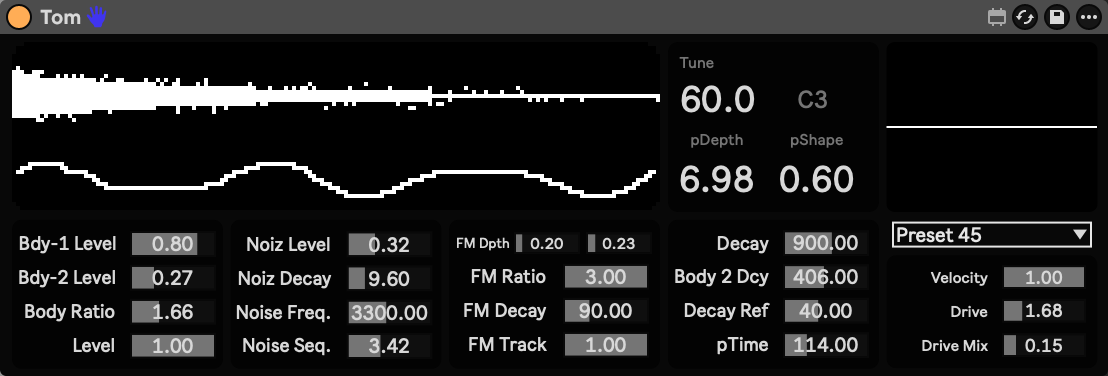
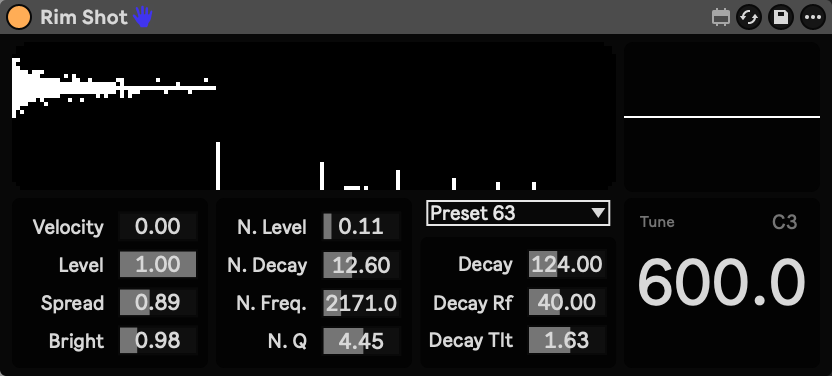
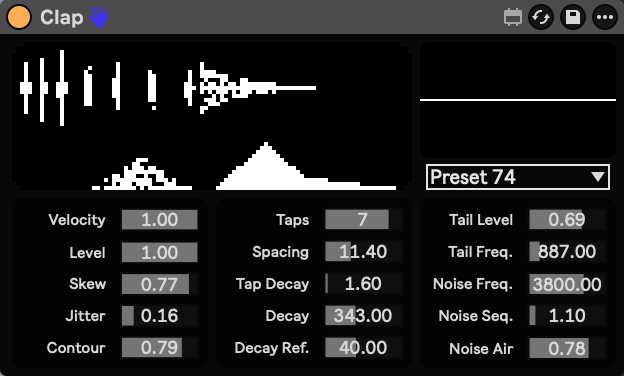
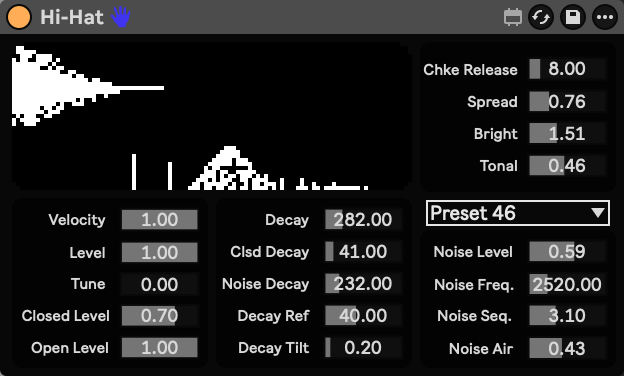
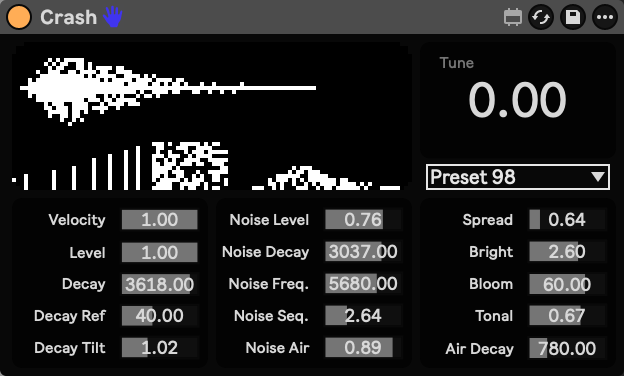
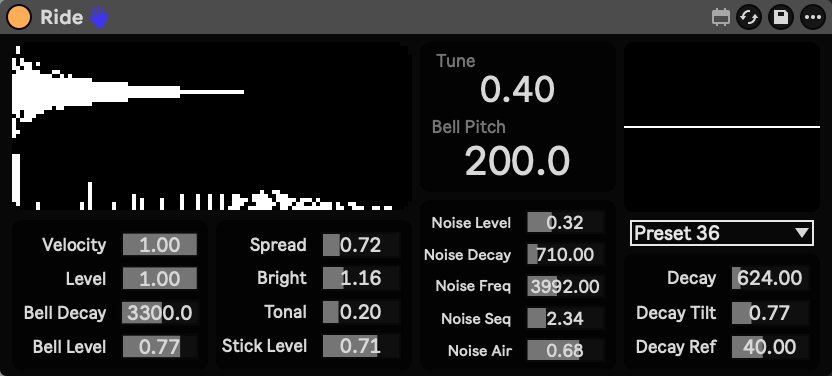
All of the drums are digitally synthesized. Some tracks use drum sounds made in Serum 2. Most of the others use a custom Max for Live device I built, inspired by the Roland TR-1000, which synthesizes each drum voice in gen~. I wanted the drums to sound modern, clean and clear, at times leaning into a drum-machine sensibility, shaped by the writing of the beat, the presets chosen, and the mix.